Rhodiola rosea is an adaptogen that has been studied for mood, anxiety, stress, fatigue, and burnout, and I take it every day, all year long, especially in winter. Below I share what the research says, what it doesn't say, and exactly how I use it.
I'm always a little bummed when daylight saving time ends. I love the sunshine, then suddenly it's dark by 5pm! But my mood stays upbeat all winter, and Rhodiola Rosea and my daily routine are a big reason why.
In this post:
Some links in this post are affiliate links, so I may earn a small commission if you buy something. I only recommend products I personally use and/or that are backed by extensive research and experts I trust. Thank you for supporting my small business!
Medical disclaimer: This content is for informational purposes only. Nothing in this post is medical advice. Always talk with your own healthcare provider before starting a supplement or making changes to your health routine.
Why I Take Rhodiola Rosea Every Day
I started taking Momentous Rhodiola Rosea in early 2024, and I've taken it almost every day since! When I take it, I notice a boost in my mood, and I definitely feel more resilient to stress. It helps me feel more positive and hopeful.
On the rare occasions I forget to take it, I notice a dip, and once I start taking it again, I feel better within a day or two.
Even though I take it all year long, winter is the season I appreciate the effects most. Luckily, I don't have seasonal affective disorder, but I definitely feel it when the days get shorter. Rhodiola is one piece of how I take care of my energy and mood in the darker months, along with getting outside for sunshine at least twice a day. (I live in Charlotte, NC, where we are blessed with sunshine!) When I lived in Erie, PA, I felt a much bigger dip in my mood every winter as there are far fewer sunny days. I’ve learned a lot since then, and I’ve become much more intentional about the tools that keep my mood and performance steady.
What Is Rhodiola Rosea?
Rhodiola rosea, also called golden root or roseroot, is a plant that grows in cold, mountainous regions. People in Scandinavia and Russia, places that know a thing or two about long, dark winters, have used it for centuries, and much of the research on it comes from there. Rhodiola is an adaptogen, a plant that helps your body cope with stress and get back to balance.
What is an adaptogen? An adaptogen is a plant or mushroom that helps your body adapt to stress, whether that stress is physical, like a hard workout or a bad night of sleep, or mental, like a big deadline. The goal is balance. Adaptogens support your body's stress response, so it can handle stress better and get back to normal faster afterward.
Adaptogens may help bring cortisol down when stress pushes it up, or support it when fatigue drags it down (Cleveland Clinic). For Rhodiola, the research so far supports the first part: in a 2009 Swedish trial, people with stress-related fatigue who took it had a lower cortisol response when they woke up. Adaptogens aren't stimulants like caffeine, and they're not a quick fix either. Think of them as support for how your body handles stress over time.
Ashwagandha and ginseng are two other well-known adaptogens.
What the Research Says About Rhodiola Rosea
Here's what the studies show and what they don't, including who funded them, because that matters too.
What does the research say about Rhodiola and mood?
In a 2007 clinical trial of 89 adults with mild to moderate depression, people who took Rhodiola for six weeks (340 or 680 mg a day of an extract called SHR-5) had significant improvements in their depression scores compared to placebo. Their insomnia and emotional instability improved too. The company that makes that extract funded the study.
A 2015 University of Pennsylvania trial compared Rhodiola to sertraline (Zoloft) in 57 adults with major depression over 12 weeks. Sertraline had a bigger effect, but people taking it had about twice the side effects (63% vs. 30%). The researchers called the results preliminary.
A 2025 systematic review looked at three studies of people with mild to moderate depression and found that Rhodiola reduced the intensity of their symptoms.
In a 2015 study of 80 mildly anxious students, those who took Rhodiola for 14 days reported significantly less anxiety, stress, anger, confusion, and depression, and better overall mood, than students who took nothing. There was no placebo group, so the researchers called for more studies.
What about stress, fatigue, and burnout?
In a 2009 Swedish trial, 60 adults with stress-related fatigue took Rhodiola (576 mg a day) or a placebo for four weeks. The Rhodiola group improved more on burnout scores and concentration, and had a lower cortisol response when they woke up.
In a 2017 study of 118 adults with burnout symptoms, people took 400 mg a day for 12 weeks. Exhaustion, fatigue, mood, and "lack of joy" all improved, and some changes showed up in the first week. There was no comparison group, and an employee of the company that makes the extract co-wrote the study.
Has Rhodiola been studied for seasonal depression or the time change?
Not specifically. No study has looked at Rhodiola for seasonal depression or the time change, so I can't tell you it helps with that. What I can tell you is what has been studied (mood, anxiety, stress, fatigue, and burnout), and that I personally lean on it most when the days get shorter.
Most of these studies are small, several were funded by companies that make Rhodiola, and they used different extracts and doses. The research is promising, and it's still early.
How I Take Rhodiola Rosea
I take 300 mg (three capsules of Momentous Rhodiola Rosea) all at once, first thing in the morning on an empty stomach. That's more than the one capsule on the label, so before you go above it, talk with your doctor or another healthcare provider you trust, like a functional medicine doctor or nutritionist.
If you're new to Rhodiola, I suggest starting with 100 mg in the morning for a week and seeing if you notice a difference.
Take it earlier in the day, never at night. Momentous recommends the morning or early afternoon to support energy and avoid sleep disruption.
Why I Use Momentous Rhodiola Rosea
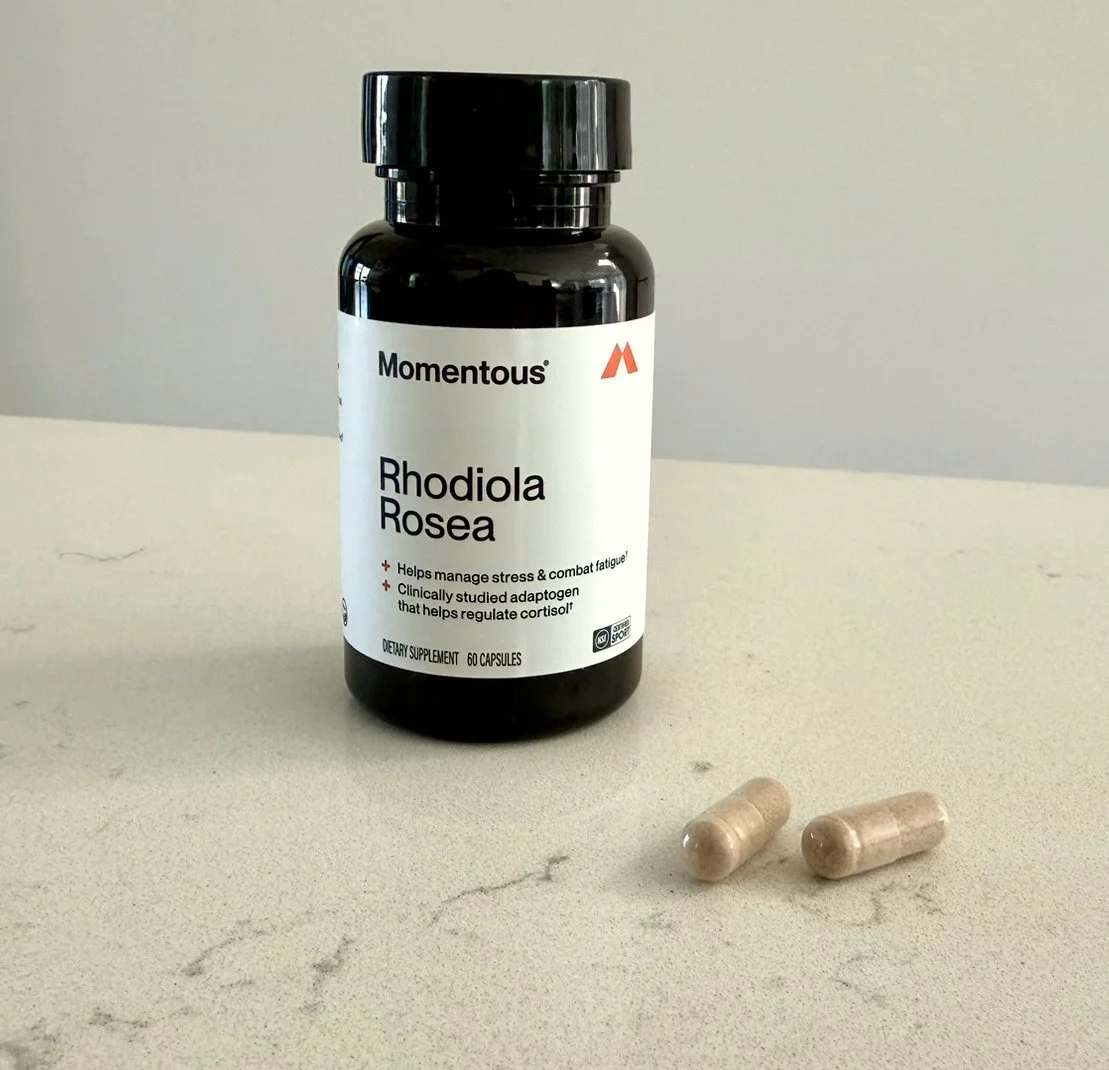
I use Momentous because of their standards. Every product is independently tested and certified by NSF Certified for Sport or Informed Sport, they never use proprietary blends, and they publish every test result. Their formulas are clean, too.
SuppCo, an independent supplement rating site, gives Momentous Rhodiola Rosea a 9.9 out of 10 TrustScore, rated Excellent and higher than 98% of Rhodiola rosea products. It's also part of the TESTED by SuppCo program, where SuppCo buys products the same way you would and tests them independently.
NSF Certified for Sport tests supplements for 270+ substances banned by major athletic organizations, including the NFL, MLB, NHL, and PGA. The U.S. Anti-Doping Agency (USADA) recognizes it as the program best suited for athletes. NSF also verifies that what's on the label is in the bottle and nothing else, and it audits the manufacturing facility, not just the product.
Each capsule has 100 mg of Rhodiola root extract standardized to 3% rosavins and 2% salidroside, and it's vegan, gluten-free, and non-GMO.
Use code LOMYRICK or click the link below to save at least 14%, and more if you subscribe.
My Winter Routine: Morning Light and Staying Active
Every morning, once the sun is up, I get outside for a walk, even a short one. In winter, it's sometimes still dark when I wake up, so I wait until I can actually see the sun. When it's cold, I bundle up! Then I try to get out at least one more time while the sun is out for another walk and more sunlight.
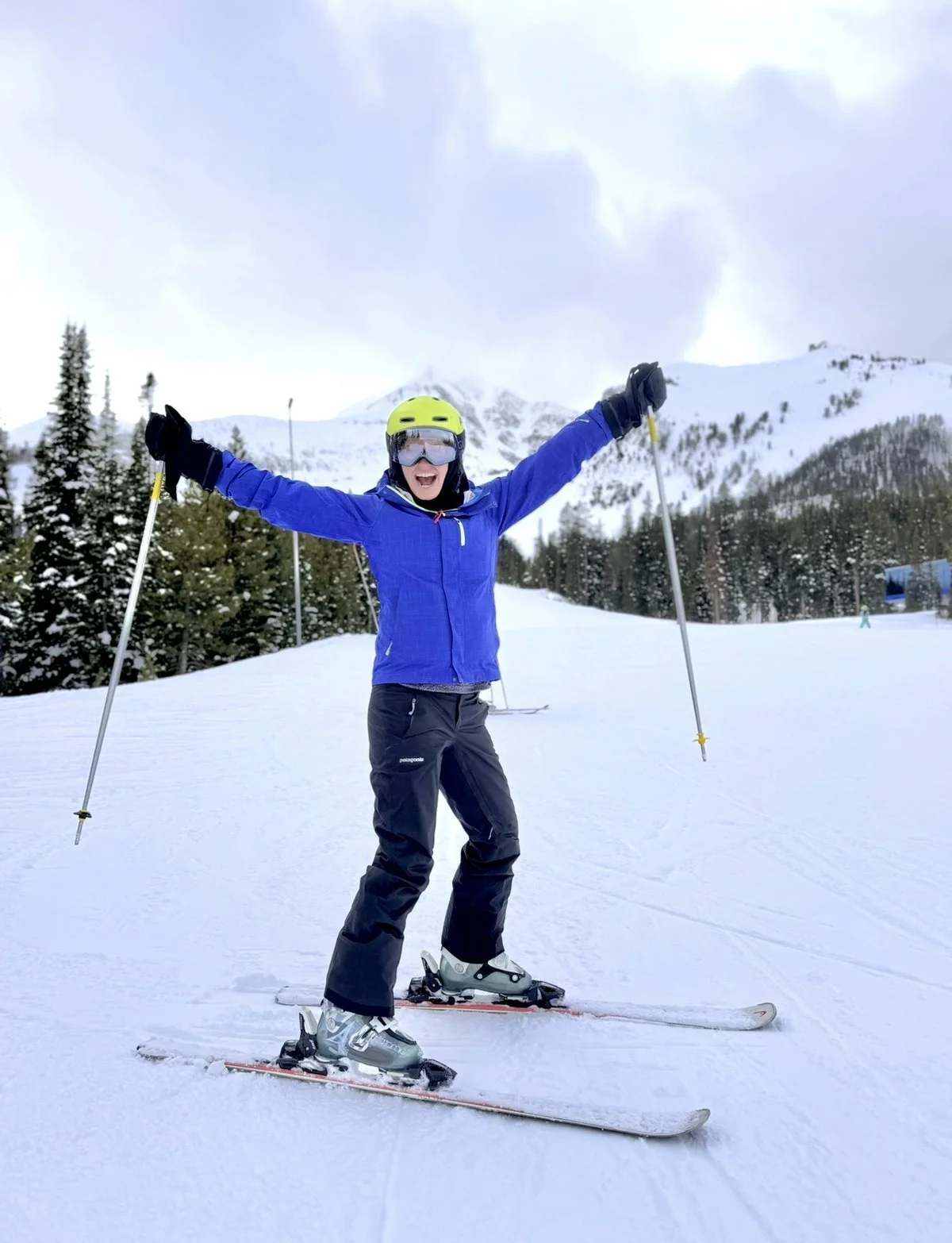
I stay as active as I can outside in winter, whether it's hiking, skiing, or walking.
Dr. Andrew Huberman says, "Nothing is as good as sunlight." His guideline is to get outside within 30 to 60 minutes of waking: about 5 minutes on a clear day, about 10 when it's cloudy, and 20 to 30 minutes when it's very overcast.
If you live somewhere with long, gray winters like I did in Erie, light therapy is worth knowing about. Bright light therapy is considered a first-line treatment for seasonal affective disorder, and a 2020 meta-analysis of 19 trials found it worked better than placebo. Between my walks and Rhodiola, I don't personally need a light therapy device.
On days you can't get outside, a light device can help fill the gap. Huberman uses an Artograph LightPad on his desk all day, all year, as an alternative to a SAD lamp.
Who Should Talk to a Doctor First
Rhodiola is generally well tolerated, but it isn't for everyone. Talk to your doctor or healthcare provider before taking it if you:
have bipolar disorder
are pregnant or breastfeeding
take antidepressants or other medications
And if you think you might have seasonal depression, please talk to your doctor or healthcare provider. Light therapy and other treatments can help.
FAQ
What is Rhodiola rosea good for?
Rhodiola has been studied for mood, mild anxiety, stress, fatigue, and burnout. Most studies are small, so the research is promising and still early.
Can Rhodiola rosea help with the winter blues or seasonal depression?
Rhodiola rosea hasn't been studied for seasonal depression specifically. But it has been studied for mood, mild to moderate depression, stress, fatigue, and burnout, with promising results. It also has a long history of traditional use in Scandinavia and Russia, where winters are long and dark (Panossian et al., 2010). If you think you have seasonal depression, talk to your doctor. Bright light therapy has been a mainstay treatment since the 1980s (NIMH).
What supplements help with the winter blues?
No supplement is proven to prevent the winter blues. Rhodiola rosea is the one I take every day, and research supports it for mood, stress, and fatigue. Light therapy has the most research behind it for winter-pattern depression (NIMH). Talk to your doctor or healthcare provider before starting any supplement, especially if you take medication.
Why do I feel sad when it gets dark early?
Researchers are still figuring out exactly why. Less daylight seems to affect serotonin and melatonin, which help keep your body's daily rhythm in sync with the seasons (NIMH). Morning light and staying active make a big difference for me. If the sadness lasts for weeks or gets in the way of your life, talk to your doctor.
How much Rhodiola rosea should I take?
The Momentous label says one 100 mg capsule a day. Studies used 340 to 680 mg a day of a different extract. I suggest starting with 100 mg for a week and checking with your doctor before going higher.
When should I take Rhodiola?
Earlier in the day. Momentous recommends the morning or early afternoon to support energy and avoid sleep disruption. Don't take it at night.
Can I take Rhodiola rosea every day?
The studies above used it daily for four to 12 weeks, and Momentous says consistent daily use gives the strongest results. I've taken it almost every day since early 2024. If you plan to take it long term, check in with your doctor or healthcare provider.
When will I notice a difference?
In the 2017 burnout study, some changes showed up within the first week. Other studies ran four to 12 weeks, and Momentous says daily use over six to eight weeks gives the strongest results.
Who shouldn't take Rhodiola?
Talk to your doctor first if you have bipolar disorder, are pregnant or breastfeeding, or take antidepressants or other medications.
More on Energy, Sleep, and Stress
If your energy has been low for a while, here's how I fixed my sleep and low energy.
If stress is running the show no matter the season, my free Find Your Invisible Bottlenecks Assessment takes about 3 minutes and shows you what's holding you back.
If you're ready to feel and perform better in all aspects of life, let's work together 1:1!